Why Traction Matters More Than Cushioning for Dance Cardio Footwear
Quick Answer: Dance cardio involves frequent pivots, quick direction changes, and lateral movement that put a premium on controlled, non-excessive traction — a shoe with too much grip can cause joint strain during pivots, while too little risks slipping, making traction a more important safety factor than the cushioning most running-focused shoes emphasize.
A well-cushioned running shoe, ironically, isn’t always the safest choice for a dance-based class.
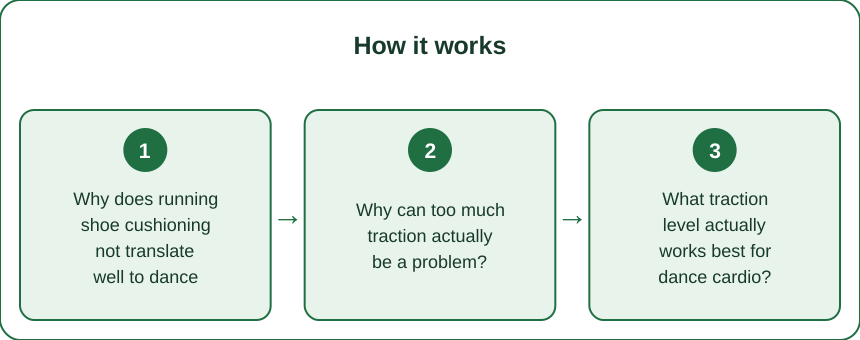
Why does running shoe cushioning not translate well to dance cardio?
Running shoes are built primarily for forward linear motion, with tread patterns and cushioning optimized for heel-to-toe impact, not for the pivoting and multidirectional footwork dance cardio requires, which is why a well-cushioned running shoe can still feel unstable or grip unpredictably during lateral moves.
Why can too much traction actually be a problem?
A shoe designed to grip aggressively (like a trail running shoe) can catch the floor during a pivot instead of allowing a controlled rotation, transferring twisting force into the knee and ankle joints instead of letting the foot rotate smoothly — this is a less obvious but real injury risk in pivot-heavy formats.
What traction level actually works best for dance cardio?
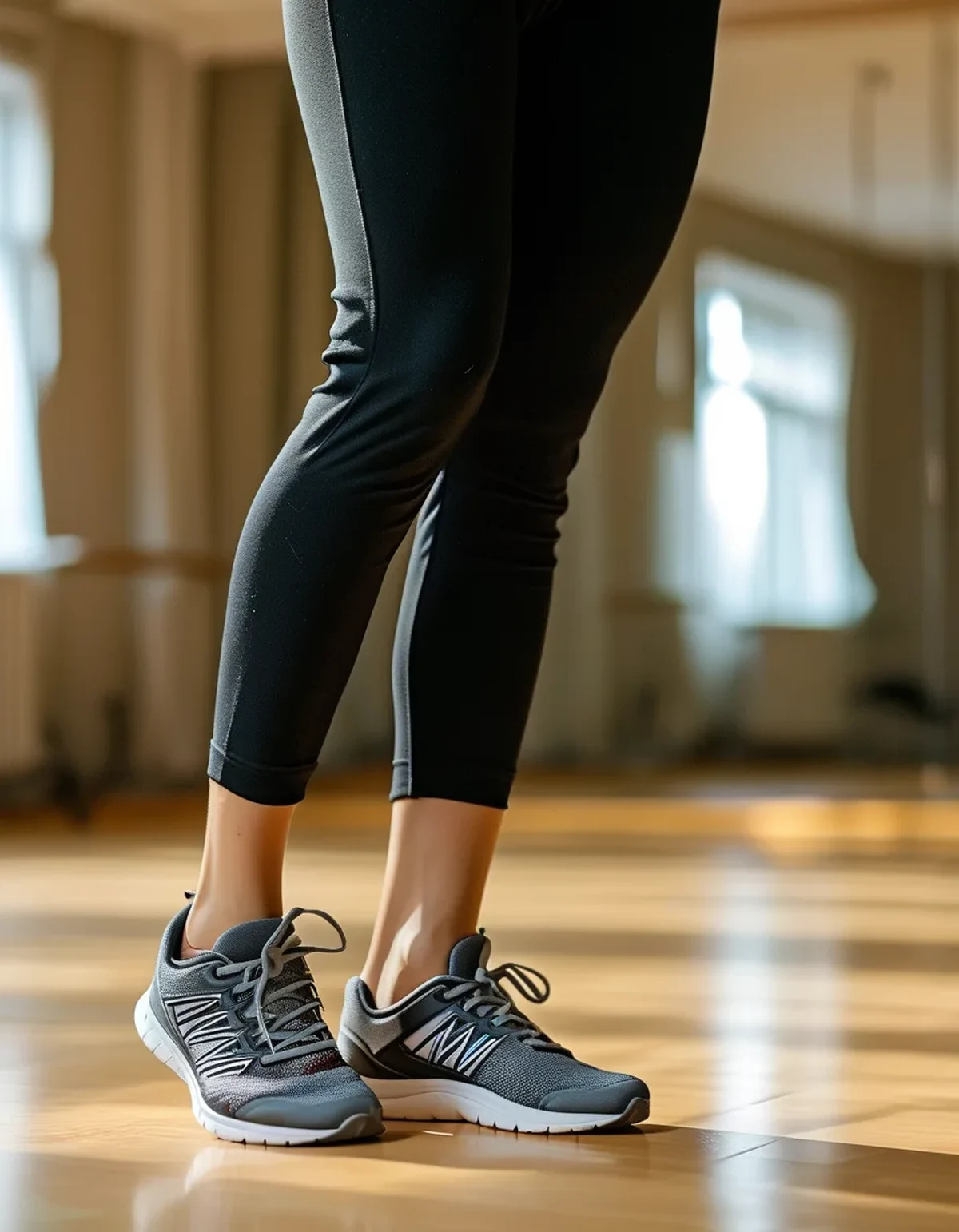
A moderate, smooth-soled cross-training or dance-specific shoe that allows controlled pivoting without excessive stick tends to be the safer middle ground, rather than either a maximum-grip trail shoe or an overly slick minimalist sole.
Does flooring type change which shoe traction is appropriate?
Yes — a studio with a sprung wood floor generally needs less aggressive shoe traction than a rubberized gym floor, since the flooring itself already provides some grip, meaning the same shoe can feel appropriately gripped in one setting and excessively sticky in another.
Is dance-specific footwear worth the investment over general athletic shoes?
For anyone doing dance cardio regularly, yes — dance-specific or cross-training shoes are built with pivot-friendly sole patterns in mind, and the difference in joint comfort during pivot-heavy classes is often noticeable enough to justify a dedicated pair over a general running shoe.
TL;DR:
- Dance cardio’s pivoting demands controlled traction, not maximum grip
- Excessive traction can transfer twisting force into knees and ankles during pivots
- A moderate, smooth-soled cross-training shoe is generally the safer middle ground
- Studio flooring type affects how much shoe traction is actually appropriate
Cushioning matters, but traction suited to pivoting is the more overlooked safety factor.
Keep Reading
This article is for general informational and styling purposes only. Fit, sizing, and product availability may vary.
