Why Dance Cardio Shoes Wear Out Faster Than Running Shoes, and What to Do About It
Quick Answer: Dance cardio involves far more lateral, pivoting, and multidirectional movement than running, which running shoes are specifically built to resist rather than support — running shoes are optimized for forward, linear motion, so their outsole and upper materials wear unevenly and break down faster under dance cardio’s constant side-to-side and rotational stress; shoes specifically designed for multidirectional studio movement hold up meaningfully longer under this different demand pattern.
Dance cardio shoes wearing out fast usually isn’t a sign of a poor-quality shoe — it’s a sign of the wrong shoe category being used for a movement pattern it wasn’t built to handle.
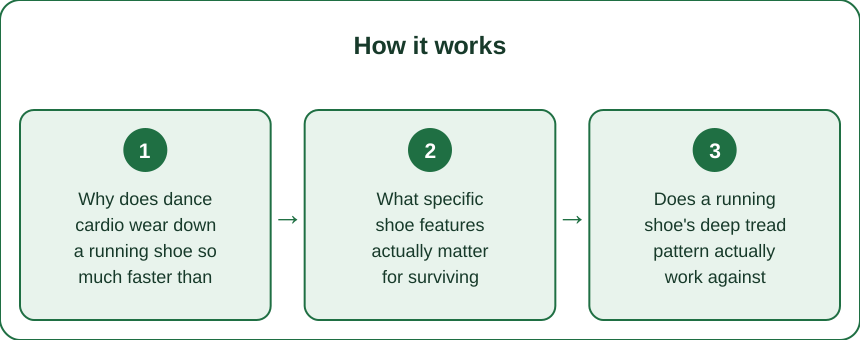
Why does dance cardio wear down a running shoe so much faster than actual running does?
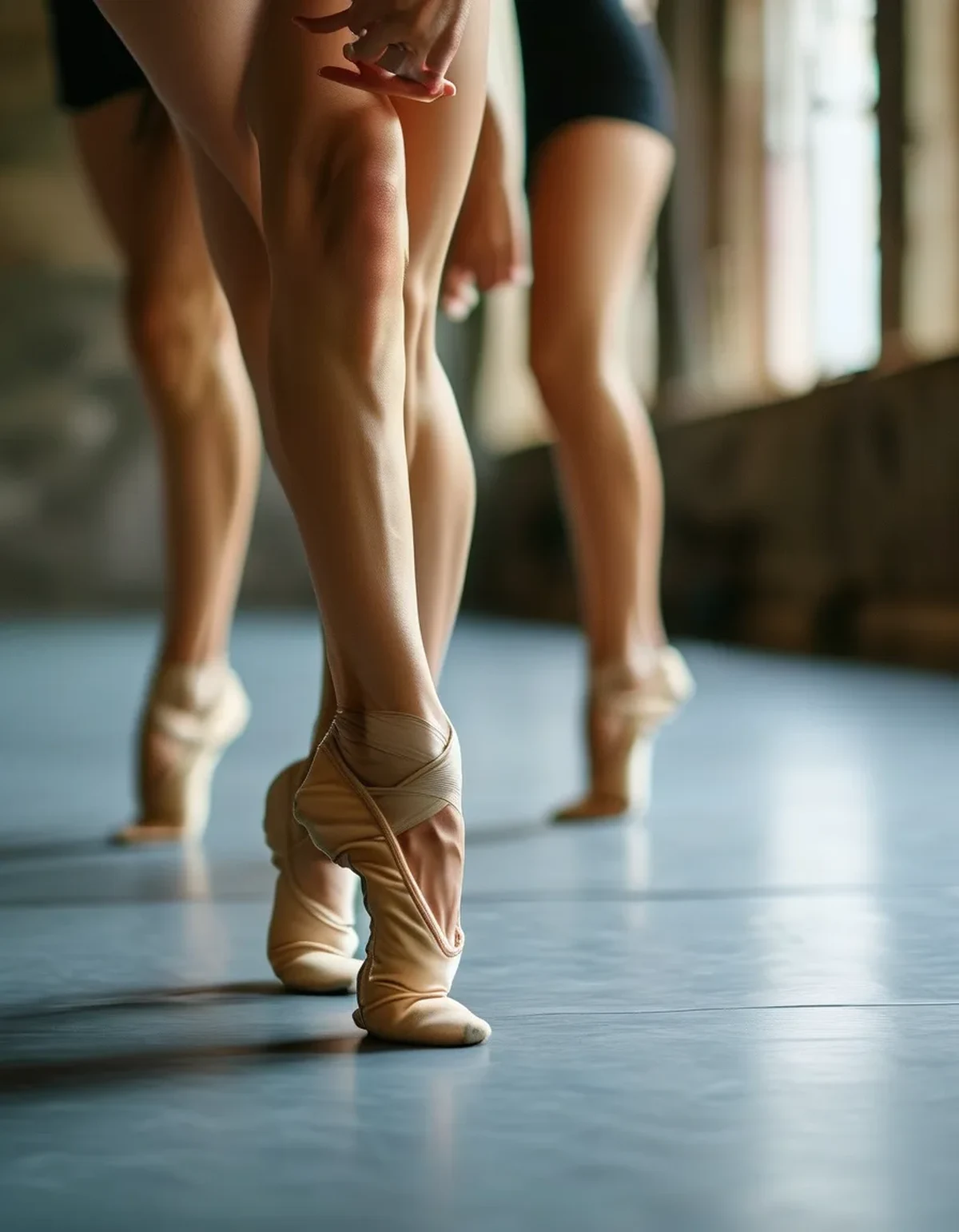
Running shoes are engineered primarily for repeated linear, forward-motion impact, with outsole tread patterns and upper support structures optimized for that specific movement. Dance cardio involves frequent lateral steps, pivots, and quick directional changes, which apply shear and rotational stress the running shoe’s tread and upper weren’t designed to handle, causing faster, more uneven wear — particularly at the outer edges of the sole and along lateral upper seams.
What specific shoe features actually matter for surviving dance cardio’s movement pattern?
A flatter, less deeply lugged outsole that allows smooth pivoting, reinforced lateral upper support, and a sole designed for multidirectional traction rather than purely forward grip are the key features that hold up better under dance cardio’s demands. A shoe’s cross-training or studio-specific category, rather than a running-specific model, is generally built with these features already in mind.
Does a running shoe’s deep tread pattern actually work against pivoting movements specifically?
Yes — a deep, aggressive tread pattern designed to grip forward on varied outdoor terrain can actually catch and resist the smooth pivot dance cardio footwork requires, which not only accelerates tread wear but can also increase knee and ankle strain from a foot that doesn’t rotate as freely as the movement demands. A flatter, smoother outsole designed for studio floors allows pivoting with less resistance and correspondingly less wear.
How much longer do dedicated dance or cross-training shoes actually last compared to running shoes used for the same activity?
While it varies by brand and usage frequency, many users report dedicated cross-training or dance-specific shoes lasting noticeably longer under regular dance cardio use than running shoes pressed into the same role, since the construction is matched to the actual stress pattern rather than fighting against it. Beyond durability, this matched design also generally provides better support and reduced injury risk for the lateral movement pattern specifically.
What Nobody Tells You About Dance Cardio Shoe Wear
Checking the outsole wear pattern on an old pair of shoes reveals a lot about whether the right shoe category is being used — heavy, uneven wear concentrated at the outer edges or ball of the foot from pivoting is a clear sign a running-specific shoe is being asked to do a job it wasn’t built for, and it’s a useful, concrete way to confirm the mismatch before replacing the shoes.
FAQ: Dance Cardio Footwear, Answered
Are dedicated dance sneakers actually different from general cross-training shoes?
Some dance-specific shoes offer even more pivot-friendly outsoles (sometimes with a rotating disc built into the sole), while general cross-training shoes provide a solid middle ground of multidirectional support without being as specialized.
How often should dance cardio shoes typically be replaced with regular class attendance?
For regular attendees (two to three classes weekly), many find replacement needed every four to six months, though this varies with shoe quality and individual movement intensity.
Does barefoot or minimal-shoe dance cardio avoid this wear-and-tear issue entirely?
Some dance styles are practiced barefoot or in minimal socks specifically to allow natural pivoting, though this shifts the consideration to floor surface and joint support rather than eliminating footwear considerations altogether.
TL;DR:
- Running shoes are built for linear motion, while dance cardio demands lateral and pivoting movement
- This mismatch causes faster, uneven wear at the outer edges and lateral seams of a running shoe
- Flatter outsoles and reinforced lateral support in cross-training shoes handle pivoting far better
- Checking an old shoe’s wear pattern reveals whether the wrong shoe category is being used
Fast-wearing dance cardio shoes usually point to a shoe-category mismatch rather than poor quality, and switching to a cross-training or dance-specific shoe addresses the actual movement demand directly.
Keep Reading
This article is for general informational and styling purposes only. Fit, sizing, and product availability may vary.