The Floor Changes Dance Cardio More Than the Choreography Does
Quick Answer: A sprung studio floor absorbs and returns a meaningful portion of landing force, while concrete under thin carpet or laminate returns almost none of it back to the muscles and instead sends it up through the joints. Doing identical choreography at home on a hard floor can substantially increase impact load on knees, shins, and hips, which is why home sessions often hurt more than studio ones despite feeling easier.
You followed the same instructor, did the same 30 minutes, and your shins hurt for two days. The routine did not change. The thing under your feet did.
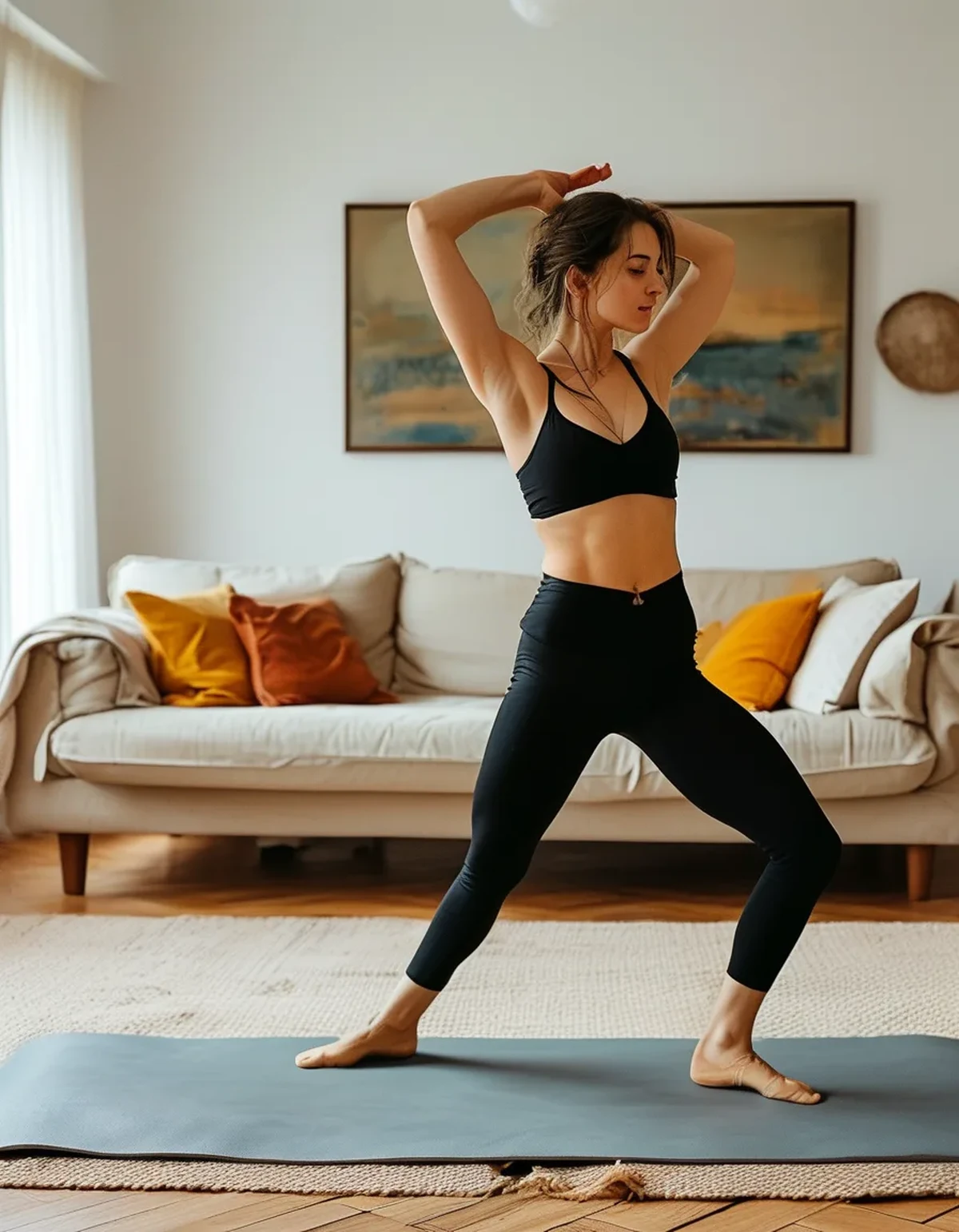
What does a sprung floor actually do?
It deflects under load and returns energy, which changes both how much force reaches your joints and how much work your muscles have to do.
A properly built dance floor sits on a subfloor system with foam blocks or flexible battens. When you land, the surface gives slightly, spreading the impact over a longer time. Force is impulse divided by time, so extending the contact time reduces peak force, which is the same principle as bending your knees on landing.
It also returns a portion of that energy on push-off, which is why studio floors feel bouncy and why the same routine feels less tiring on one.
Compare that to concrete slab under laminate, which is the substrate under a great many ground-floor rooms. Deflection is essentially zero. All the force that would have been absorbed goes into your body instead.
The common assumption is that carpet solves this. Household carpet with standard underlay provides a small amount of cushioning and is far closer to hard floor than to a sprung floor in behavior. It softens the feel without meaningfully changing peak impact.
Why does this affect some people more?
Because impact force scales with body mass and with landing mechanics, and both vary a lot between people doing the same class.
Ground reaction force during jumping and landing routinely reaches multiples of body weight. A higher body mass means a proportionally higher absolute force through the same joints on every repetition, and a 45-minute dance cardio class contains a lot of repetitions.
This is a mechanical fact rather than a judgment, and it has a practical implication: the surface matters more, not less, for heavier bodies, and choosing the floor is a higher-leverage decision than choosing the class.
Landing mechanics matter equally. Landing with a stiff knee and a flat foot transmits force upward with minimal absorption. Landing through the forefoot with knee and hip flexion uses muscle as a shock absorber, and muscle is exactly what you want doing that job rather than cartilage and bone.
Fatigue degrades mechanics, which is why the last ten minutes of a class carry disproportionate risk. The moves are the same; your ability to absorb them is not.
What Nobody Tells You About Home Dance Workouts
The room you pick matters more than the mat you buy. An upper-floor room with joists underneath has genuine deflection built in. A ground-floor room on a slab has none. If you have the choice, that single decision does more than any equipment.
Most yoga mats make impact worse, not better. A thin yoga mat provides negligible cushioning and adds an unstable, grippy surface that catches the foot during pivots. Ankle rolls in home dance cardio are very often a mat problem.
Puzzle-mat foam tiles are the affordable real answer. Half-inch to three-quarter-inch EVA foam tiles provide meaningful compression, cost little, and can be laid over a 6x6 area. This is the closest a living room gets to a studio floor.
Shoes matter more at home than at the studio, which is the reverse of what people assume. Barefoot on a sprung floor is reasonable. Barefoot on concrete for 40 minutes of impact is not, and a cushioned cross-training shoe is worth wearing indoors.
The one people find hardest to accept: you may need to modify the same routine you do fine with in class. Swapping jumps for low-impact versions at home is not scaling down, it is compensating for a surface that is doing none of the work the studio floor was doing for you.
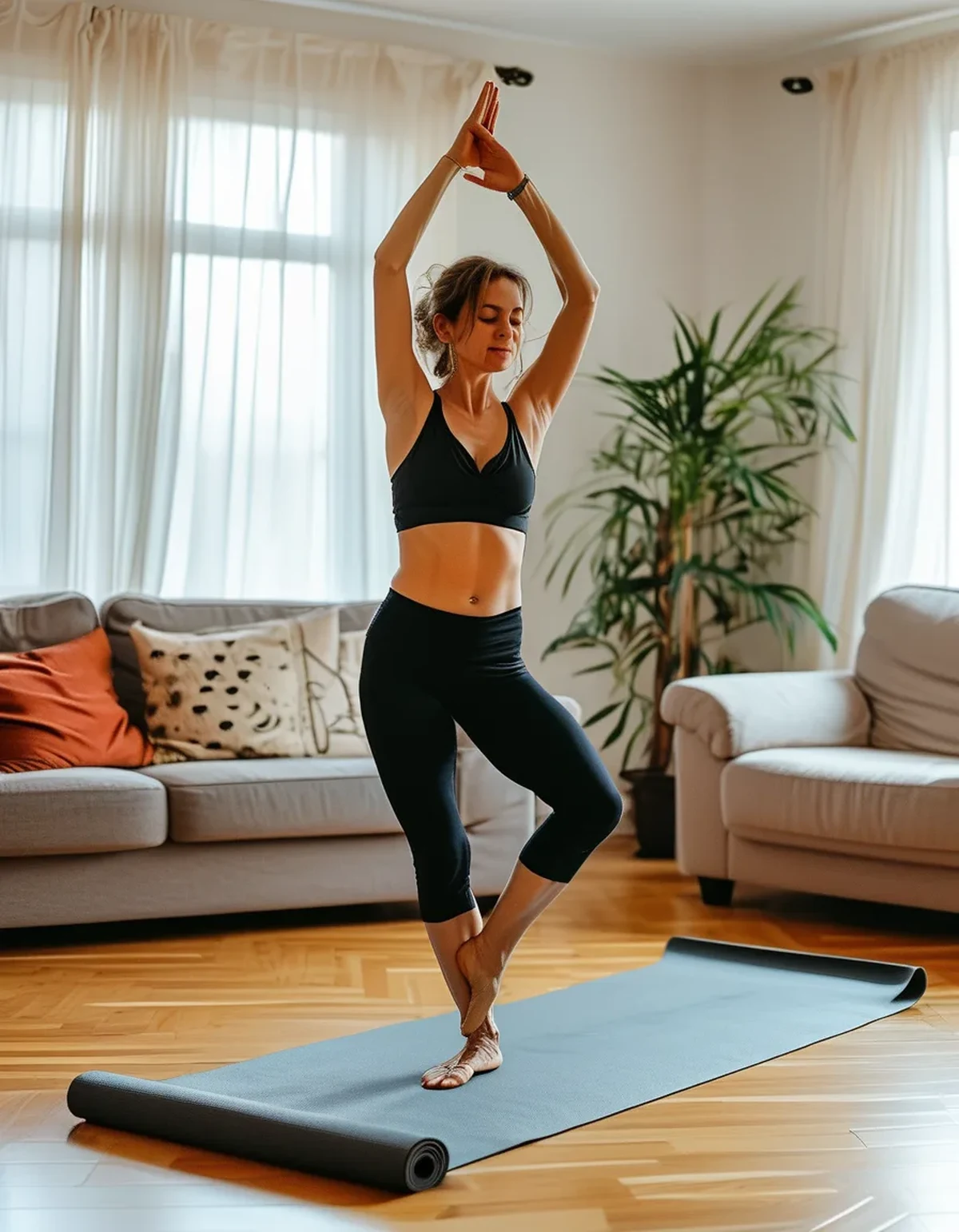
How do you tell if the floor is the problem?
Three signals point at surface rather than technique or fitness.
Location of the pain. Shin pain, particularly along the inside of the shin, is the classic impact-and-surface complaint. So is a dull ache in the kneecap and pain in the heel or arch first thing the next morning.
Timing. Pain that appears the day after and eases with movement, rather than sharp pain during, tends toward cumulative load rather than an acute problem.
Context switching. The clearest test is doing the same routine in two places. If a studio session leaves you fine and an identical home session leaves you sore, you have your answer without any further investigation.
What suggests something else: pain in one specific spot that is tender to press, pain that worsens through a session rather than after, swelling, or anything that changes how you walk. Those warrant assessment rather than a new floor.
This is general information, not medical advice. Persistent shin pain can indicate a stress reaction, which needs proper evaluation and rest rather than better cushioning.
What is the practical setup?
In order of impact per dollar.
1. Choose the room by what is underneath it. Upstairs over joists beats ground floor over slab, every time. If a basement is the only option, treat it as the hardest surface you will encounter and plan accordingly.
2. Lay 12mm to 20mm EVA foam tiles over at least a 6 by 6 foot area. Larger if the routine travels. Insufficient area means you land off the edge, which is worse than no mat.
3. Wear cushioned cross-training shoes with lateral support. Running shoes are built for forward motion and their soft, tall heels can be unstable in the lateral movement and pivots that dance cardio is full of.
4. Modify the highest-impact moves. Replace jumps with step-touches and hops with weight shifts. You keep the heart rate and remove most of the load.
5. Build volume gradually. If you are moving from studio to home, cut duration by a third for the first two weeks. The tissue adapts to the new surface, but it needs the time.
And one thing worth checking: many home floors have a specific dead spot or a slippery patch. Walk the area you will use and pivot on it before starting the video, because finding out mid-routine is how the ankle goes.
FAQ: Dance Cardio Floor Questions, Answered
Is carpet good enough?
Better than laminate, not close to a sprung floor. Carpet over a wooden subfloor upstairs is genuinely reasonable. Carpet over a concrete slab provides mostly the feel of cushioning without much of the function.
Will foam tiles ruin my floor or annoy downstairs neighbors?
They protect the floor rather than damage it, and they reduce transmitted noise noticeably, though not entirely. For neighbors, foam plus low-impact modifications does most of the work.
Do I need different shoes for home versus studio?
Often yes. Studio floors reward a flatter, more flexible shoe or bare feet because the floor absorbs. Hard home floors reward more cushioning. Keeping one pair for indoors and treating them as home-only also keeps grit off your mat, which extends its life.
TL;DR:
- Sprung floors absorb and return force; slab and laminate return it into your joints instead
- Impact scales with body mass, so surface choice matters more for heavier bodies, not less
- Pick the room by what is under it, add half-inch foam tiles over a 6x6 area, and wear cushioned cross-trainers
- If the same routine hurts at home but not at the studio, the floor is the variable
Before you change the workout, change what is under it. Forty dollars of foam tiles fixes more home dance cardio pain than any modification to the choreography.
Keep Reading
This article is for general informational and styling purposes only. Fit, sizing, and product availability may vary.
