Why Your Calves Take the Hit in Dance Cardio
Quick Answer: Most dance cardio soreness lands in the calves because beginners stay on the balls of their feet through the whole class instead of letting the heels come down between steps. Landing heel-through on the grounded moves shifts the work to your glutes and quads and cuts calf load substantially.
Your first three dance classes and the same result each time: calves so sore that stairs become a negotiation. Meanwhile the instructor said this was a full-body workout, and you cannot feel it anywhere else. That mismatch is a technique tell.
Why do the calves take everything?
Because of where you are landing, and how long you stay there.
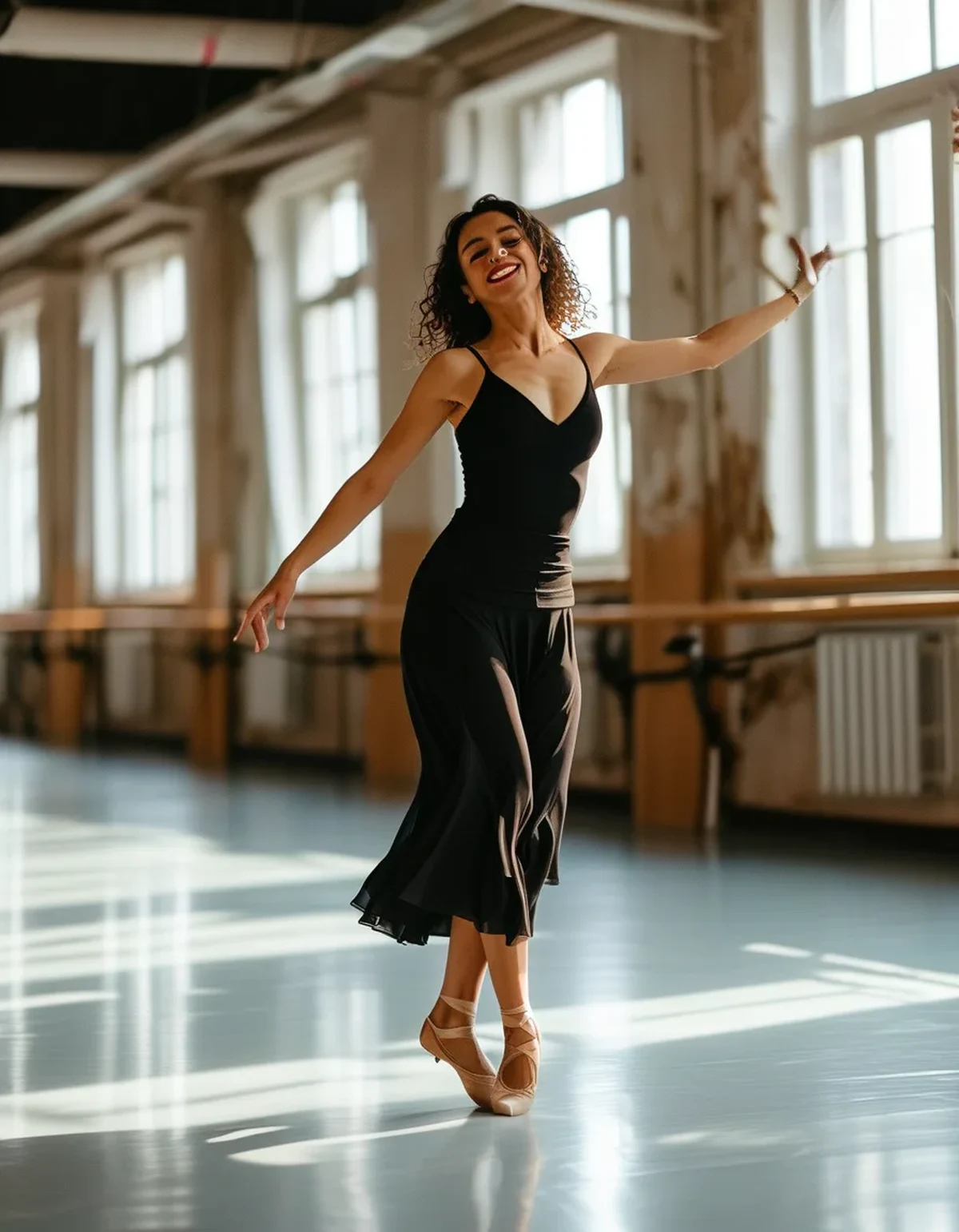
Dance cardio has a lot of bouncing, and new participants almost universally stay up on the balls of the feet through the entire routine. It feels lighter, more dance-like, and quieter.
But staying on the forefoot means the calf muscles — gastrocnemius and soleus — are working isometrically for 45 straight minutes while also absorbing every landing. They never get a moment of rest, because coming down to a flat foot is the rest.
Meanwhile the glutes and quads, which should be doing most of the work in a movement class, barely participate. They only engage properly when the hip and knee bend, and a bouncing forefoot stance keeps both relatively straight.
The calves are not taking the hit because they are weak. They are taking it because they are the only ones working.
What should actually be happening?
A distinction between two kinds of moves.
Traveling and jumping moves are legitimately forefoot-dominant. You land toe-ball-heel, absorbing through the foot, and the calf does its job.
Grounded moves — steps, side taps, hip movements, most of the choreography in a typical class — should be done with the heel down and the knees soft. Weight in the middle of the foot, hips loaded, glutes working.
The transition between them is what people miss. Most beginners never come down at all. Watch a good instructor’s feet rather than their arms and you will see heels touching constantly, even during high-energy sections.
The cue that fixes it fastest: think about pressing the floor away rather than staying light on it. Grounded is not the same as heavy, and it is where the power in dance actually comes from.
What Nobody Tells You About Dance Cardio Soreness
A few things that rarely get explained in class.
Floor surface matters more than choreography. A sprung wood floor absorbs impact; concrete under thin carpet does not. Doing the same class at home on tile will produce dramatically more calf and shin soreness than the same class in a studio.
Shoes matter, and the usual choice is wrong. Running shoes have a raised heel and a soft, grippy sole — good for forward motion, bad for lateral movement and pivoting. A flat, low-profile cross-training or dance sneaker lets your heel reach the ground and lets you turn without your foot sticking.
Calf soreness that becomes shin soreness is a warning. Persistent shin pain during or after class needs rest and a professional opinion, not a tougher mindset.
Watching the mirror can worsen it. Watching your own feet or the instructor’s upper body pulls your weight forward onto the balls of your feet, which is exactly the position causing the problem.

How do you change the habit mid-class?
Small, specific interventions rather than an overhaul.
- Pick one grounded move per song and consciously land heels down. One move, not the whole routine. The pattern generalizes on its own over a few classes.
- Bend more at the knee and hip than feels necessary. Most beginners under-bend by a lot, and bending is what invites the glutes in.
- Take the low-impact option deliberately for the first half. Low-impact variations are almost always more grounded, which is exactly the technique you are building.
- Stand in the second row, not the front. Front-row participants tend to bounce higher and stay lighter because they feel watched.
- Check in at the halfway mark. Ask yourself where you feel the work. If the answer is calves only, drop your heels for the next song.
Expect the shift to feel like less effort at first. It is not — it is the same effort distributed across much larger muscles.
What about recovery when they are already sore?
Standard, unglamorous, effective:
- Walk. Gentle movement improves blood flow and reduces soreness faster than complete rest.
- Calf raises through a full range, including letting the heel drop below the step, done gently and only if it does not hurt. Loaded stretching helps more than passive stretching for muscle soreness.
- Stretch both heads. A straight-knee calf stretch targets the gastrocnemius, a bent-knee version targets the soleus, and most people only do the first.
- Give it 48 hours before repeating a class that produced significant soreness.
Soreness that peaks at 24 to 48 hours and eases after is normal delayed-onset muscle soreness. Pain that is sharp, localized to a specific point on the bone, or present during the activity rather than after is different and worth having looked at. This is general information, not medical advice.
FAQ: Dance Cardio Questions, Answered
Will the soreness stop happening?
Yes, and quickly. Delayed-onset soreness drops substantially after two or three exposures to a new movement pattern, a phenomenon known as the repeated bout effect. If it is still severe after five or six classes, technique is the more likely explanation than conditioning.
Is low-impact actually easier?
Not in terms of effort. Low-impact variations remove the jumping, not the work, and they often demand more from the glutes and quads because you stay lower. Many people find them harder cardiovascularly once they do them properly.
Do I need dance shoes?
Not specifically, but a flat, lightweight shoe with a smooth sole and lateral support beats a running shoe substantially for pivoting and side-to-side movement.
TL;DR:
- Calf soreness usually means you stayed on the balls of your feet for the entire class
- Grounded moves should be heel-down with soft knees so glutes and quads take the load
- Flat, low-profile shoes and a forgiving floor surface make a real difference
- Change one move per song rather than trying to fix everything at once
The good news is that this is one of the fastest technique fixes in group fitness. Drop your heels on the grounded moves and within two classes the soreness moves from your calves to your glutes — which is where it was supposed to be all along, and which feels a great deal better on stairs.
Keep Reading
This article is for general informational and styling purposes only. Fit, sizing, and product availability may vary.
